
PinT 2024
13th Workshop on Parallel-in-Time Integration
Bruges, Belgium
5 – 9 February 2024
PinT 2024
The 13th Workshop on Parallel-in-Time Integration took place at the Bruges Meeting & Convention Center (BMCC) from 5 to 9 February 2024. It was organized by KU Leuven with support from the EuroHPC project Time-X.
Thanks to the support from Time-X, the PinT 2024 workshop is offered free of charge to all researchers. However, registration is mandatory (deadline: 1 December).
Abstracts for talks
If you are interested in presenting your work in a talk at the workshop, we kindly ask you to submit your abstract (title + description) to pint2024@timex-eurohpc.eu.
Abstract submission deadline: 15 December 2023
Plenary speakers
Peter Düben (ECMWF)
Stefanie Günther (LLNL)
Johan Meyers (KUL)
Sebastian Schöps (TUD)
Scientific committee
Giovanni Samaey
Stefan Vandewalle
Robert Speck
Yvon Maday
Rolf Krause
Local organizers
Giovanni Samaey
Stefan Vandewalle
Ward Melis
Program
Monday February 5
12:00-13:00: Registration & welcome lunch
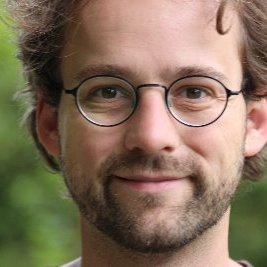
13:00-14:00: Plenary 1 – Peter Düben (ECMWF)
Title
The current impact of machine learning on numerical weather predictions
Abstract
Machine learned weather models are now competitive with conventional weather models for many forecast scores of while being easier, smaller and cheaper. But can we actually trust models that have no understanding of physics and do not even fulfil the CFL condition? And what does this mean for parallel in time algorithms?
14:00-15:30: Contributed session 1
meeting room 6
- Patrick Antony
Refinement in Space and Time with the Discontinuous Simplex Finite Element Method for Flow Problems - Moritz Billen
Continous Simplex Space Time Finite Elements in Fluid Structure Interaction - Rob Falgout
Parallel-in-Time Solution of Systems of Linear and Nonlinear Hyperbolic PDEs
Coffee break
16:00-18:00: Time-X Annual Meeting
meeting rooms 7 & 8
Tuesday February 6
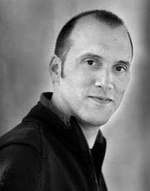
9:00 – 10:00: Plenary 2 – Johan Meyers (KUL)
Title
Parallel in time multiple shooting for problems governed by the Navier–Stokes equations
Abstract
Optimization problems governed by the time-dependent Navier–Stokes equations e.g. occur in the context of data assimilation or model-predictive control. In the past, such problems have been typically addressed using a single shooting approach. In recent decades, multiple shooting has shown to be very efficient for systems governed by ODEs (typically of small to moderate size). Here we discuss the development of efficient multiple shooting methods for large-scale problems governed by the Navier–Stokes equations. First we discuss the development of two different approaches applied to 2D time-dependent toy problems: either using an augmented Lagrangian optimization method to solve the resulting equality constrained optimization problem, or a preconditioned SQP method. Subsequently, the use of the augmented Lagrangian method is further discussed for 3D Navier–Stokes problems, including effective time parallelization and resulting speedup. We also discuss the possible trade-off between parallelization in time and parallelization in space.
Coffee break
10:30-12:00: Contributed session 2
meeting room 6
- Judith Angel
Bathymetry Reconstruction in a Water Channel - Benjamin Rodenberg
Waveform iteration in partitioned multiphysics with preCICE - Valentina Schüller
Waveform Relaxation for Coupled Groundwater and Surface Flows
Lunch break
13:00-15:00: Contributed session 3
meeting room 6
- Martin J. Gander
A Parareal Algorithm Without Coarse Propagator? - Dominik Huber
Dynamic HPC resources for PinT part I: HPC perspective - Keerthi Gaddameedi
Dynamic HPC resources for PinT part II: algorithmic perspective - Giacomo Rosilho de Souza
Parallel-in-time methods for the monodomain model in cardiac electrophysiology
Coffee break
15:30-17:00: Contributed session 4
meeting room 6
- Thibaut Lunet
Direct Parallel-in-Time method based on Spectral Deferred Correction - Lisa Wimmer
Spectral Deferred Corrections for Differential-Algebraic Equations - Thomas Baumann
Adaptivity in Spectral Deferred Corrections
Wednesday February 7
9:00-10:30: Contributed session 5
meeting room 6
- Andreas Schafelner
Goal-Oriented Adaptive Space-Time Finite Element Methods for Regularized Parabolic p-Laplace Problems - Arthur Arnoult
Discrete time analysis for domain decomposition - Mario Mally
Parallelization in Space and Time for Parabolic Problems in 3-D
Coffee break
11:00-12:30: Contributed session 6
meeting room 6
- Hans Johansen
Parallel time integration with ADI as a building block - Iñigo Jimenez-Ciga
Higher-order space-time parallel parareal methods based on splitting techniques for parabolic problems - Arne Bouillon
Single-ensemble multilevel Monte Carlo for discrete interacting-particle methods
Lunch break
13:30-15:30: Multiplier workshop
meeting room 6
Coffee break
16:00-18:00: PinT Workshop Scientific Committee Meeting
meeting rooms 7 & 8
Thursday February 8
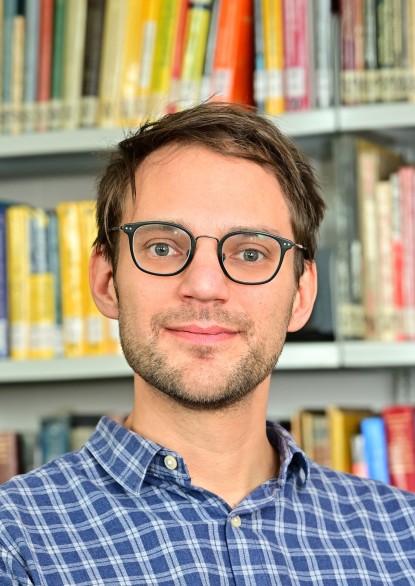
9:00-10:00: Plenary 3 – Sebastian Schöps
Title
Multiphysical Modeling and time-parallel Simulation of CERN’s quench protection system
Abstract
This talk addresses the time-parallel simulation of magnetothermal effects in superconducting magnets as used in particle accelerators. This is for example relevant to predict quenches, i.e., the unwanted transition from superconductivity to normal conductivity. An iterative coupling scheme based on waveform relaxation and parareal as well as reduced order models are used to communicate between a magnetothermal partial differential model and an electrical lumped-element circuit model. The multiphysics, multirate and multiscale problem requires a consistent formulation and framework to tackle the challenging transient effects occurring at both system and device level.
Coffee break
10:30-12:30: SRA:
discussion, presentation and panel
meeting room 6
Lunch break
13:30-14:30: SRA conclusions
meeting room 6
14:45: Social activity
19:00: Workshop dinner
Friday February 9
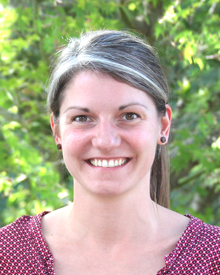
9:00-10:00: Plenary 4 – Stefanie Günther
Title
Optimal Control for Quantum Computing via Time-Parallel Multiple-Shooting
Abstract
Advances in the design of quantum technologies has led to rapidly increasing numbers of qubits in current quantum computing hardware. However, accurately controlling these large quantum systems remains a fundamental challenge in the current Noisy Intermediate-Scale Quantum (NISQ) era. Analog control pulses provide the fundamental interface between the quantum compiler and the quantum hardware, and significant progress has been made in the development of numerical methods and computational tools to optimally design pulses that realize quantum operations with high fidelity.
However, solving the optimal control problem for many-qubit systems becomes more an more difficult due to increasing computational costs when solving the underlying quantum dynamical process, as well as increasingly more complicated optimization landscapes. In this talk, I present our recent efforts to mitigate those scalability barriers by employing a time-parallel multiple-shooting algorithm to solve many-qubit optimal control problems. In this approach, intermediate quantum states are introduced as additional optimization variables while continuity of the state evolution is enforced through equality constraints. This allows the time-evolution to be decoupled into multiple time segments that can be processed independently, and in parallel. We further anticipate that the optimization iterations can travers the non-convex landscape more quickly when state continuity is relaxed throughout the optimization.
Coffee break
10:30-11:30: Contributed session 7
meeting room 6
- Ignace Bossuyt
Micro-macro Parareal for Stochastic Differential Equations and Multiscale ODEs - Robert Speck
Parallel-in-Time Software – Past, Present, Future
Closing lunch
Venue
Location
The workshop takes place at the BMCC (Bruges Meeting & Convention Center), meeting rooms 6 and 7 & 8 on the third floor (see floor plan below).
Address: Beursplein 1, 8000 Bruges

Accessibility
All information on reaching the BMCC by public transportation, plane and car can be found here.
The underground parking at BMCC costs 10 EUR per day.
WiFi access at BMCC
Please use this guide for WiFi access inside the BMCC.
Suggested accommodation
To prepare your stay in Bruges, we recommend the following hotels (the complete list of hotels can be found at Visit Bruges Convention Bureau).
- Hotel Le Bois de Bruges (next to the BMCC)
- Hotel NH Brugge (next to the BMCC)
- Hotel Portinari (close by)
- Martin’s Brugge (in city center, very good price vs. quality)
Registration
When registering for the Parallel in Time Workshop 2024, we assume you will be present during the entire workshop. If this not the case, please notify us as soon as possible (mainly for catering purposes).
Registration has been closed.
Contact
For any questions or comments, please reach out to pint2024@timex-eurohpc.eu.